1080 and Soil
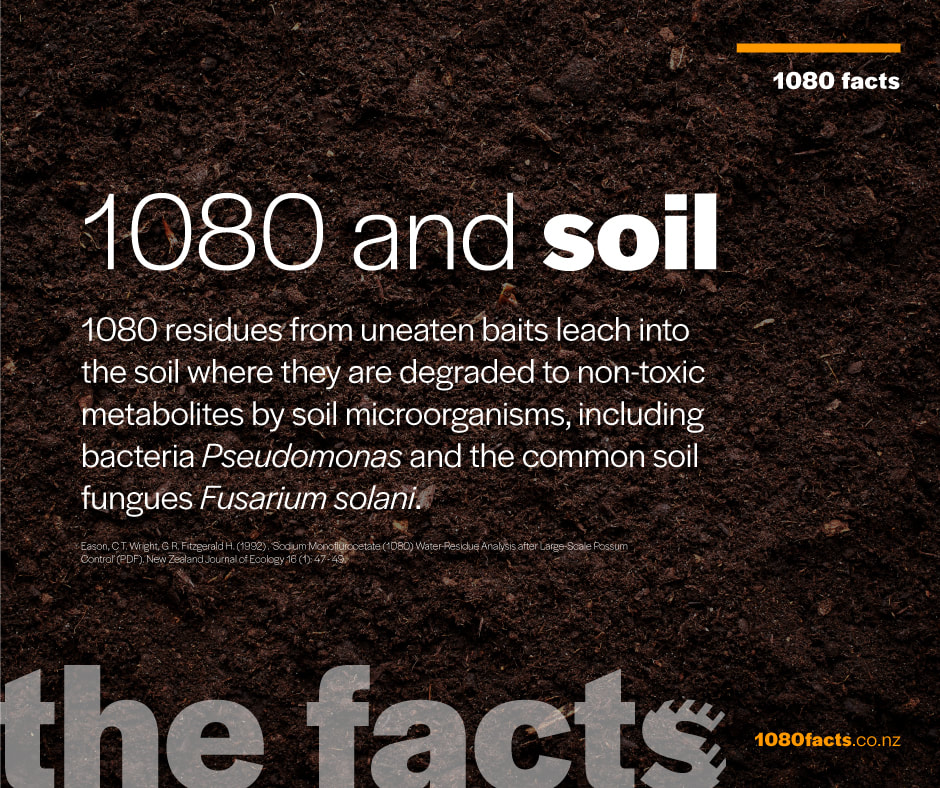
The fate of 1080 in the soil has been well-established by research defining the degradation of naturally-occurring fluoroacetate (Oliver, 1977). Sodium monofluoroacetate is water soluble and residues from uneaten baits leach into the soil where they are degraded to non-toxic metabolites by soil microorganisms, including bacteria (Pseudomonas) and the common soil fungus (Fusarium solani)
(David and Gardiner, 1966; Bong, Cole and Walker, 1979; Walker and Bong, 1981)
The fluoride-carbon bond is cleaved and, ultimately, enzyme-bound intermediates form non-toxic metabolites such as glycolate
(O'hagan, 1999)
References
Bong, C. L.; Cole, A. L. J.; Walker, J. R. L. 1979. Effect of sodium monofluoroacetate (compound 1080) on soil microflora. Soil Biology and Biochemistry 11: 13-18.
David, W. A.; Gardiner, B. O. 1966. Persistence of fluoroacetate and fluoroacetamide in soil. Nature 209: 1367-1368
Eason, C. T.; Wright, G. R.; Fitzgerald, H. (1992). "Sodium Monofluoroacetate (1080) water-Residue Analysis after Large-Scale Possum Control"(PDF). New Zealand Journal of Ecology 16 (1): 47–49.
O'hagan D, Harper DB 1999. Fluorine-containing natural products. Journal of Fluorine Chemistry 100: 127-133
Oliver, AY. 1977. The evaluation of resistance to fluoroacetate intoxication in mammals. Search 8 : 130-132
Walker, J. R. L. and Bong, C. L. 1981. Metabolism of fluoroacetate by a soil Pseudomonas and Fusarium solani. Soil Biology and Biochemistry 13: 231-235.
Bong, C. L.; Cole, A. L. J.; Walker, J. R. L. 1979. Effect of sodium monofluoroacetate (compound 1080) on soil microflora. Soil Biology and Biochemistry 11: 13-18.
David, W. A.; Gardiner, B. O. 1966. Persistence of fluoroacetate and fluoroacetamide in soil. Nature 209: 1367-1368
Eason, C. T.; Wright, G. R.; Fitzgerald, H. (1992). "Sodium Monofluoroacetate (1080) water-Residue Analysis after Large-Scale Possum Control"(PDF). New Zealand Journal of Ecology 16 (1): 47–49.
O'hagan D, Harper DB 1999. Fluorine-containing natural products. Journal of Fluorine Chemistry 100: 127-133
Oliver, AY. 1977. The evaluation of resistance to fluoroacetate intoxication in mammals. Search 8 : 130-132
Walker, J. R. L. and Bong, C. L. 1981. Metabolism of fluoroacetate by a soil Pseudomonas and Fusarium solani. Soil Biology and Biochemistry 13: 231-235.