1080: the facts
  • Home
  • The Facts
    • 1080 factsheet
    • Overview of 1080
    • The science of how 1080 works
    • Facts and figures >
      • The predators
      • The victims
    • Conservation
    • Bovine TB
    • 1080 bait and delivery
    • Alternatives to 1080
    • Regulation of 1080 >
      • Changes to 1080 regulation
  • 1080 at work
    • News
    • Case studies
    • From the field
    • Tiakina Ngā Manu
  • Research + Resources
    • Research
    • Reports
    • Resources >
      • FACTS: in pictures
      • NZ predator control map
  • Projects
    • 1080 and Water
    • 1080 fish
    • 1080 and Dogs
    • The facts of the missing rock
    • 1080 and Soil
  • Gallery
    • Photos
    • Videos
    • Links
  • The Trust
    • About the Trust
    • News from the Trust
    • Our supporters
    • Contact Us

Facts and figures

The situation
  • New Zealand has one of the highest extinction rates in the world of both plants and animals.
  • An estimated 25 million native birds are killed by introduced predators every year.


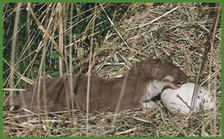
Stoats
  • Stoats alone are responsible for up to 60% of kiwi chick deaths .
  • Just to survive, a stoat needs to eat the equivalent of 12.5 fantail chicks every day.

Possums
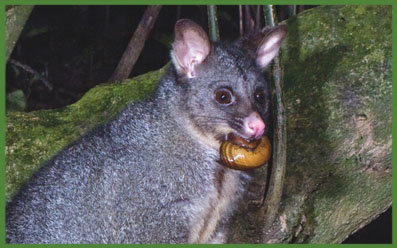
  • There are an estimated ( pg.15 ) 30 million possums in New Zealand, and up to 25 per hectare (10 per acre) in preferred habitats.
  • Possums kill birds and chicks and raid nests for eggs, as well as stripping the forest canopy.
  • Possums are also the host and carrier of the lethal disease, bovine tuberculosis, and, along with ferrets, are responsible for 44% or new infection in cattle and deer herds.
  • TB infected possums live in about 30% of New Zealand .
  • Sick and dying TB-infected possums come out onto farmland, where cattle and deer lick their carcasses .
  • All cattle and farmed deer must be registered with TBfree NZ and regularly tested. Any animal found to be infected is slaughtered immediately and herd movement is stopped. Dairy and meat exports are worth more than $14 billion annually to New Zealand.

Rats
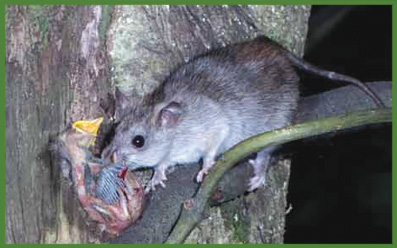
  • Rats prey on small birds, chicks, eggs and insects in the forest.
  • In ideal conditions a rat can produce 10 offspring every 8 weeks.
  • Prolific seeding (’mast') years in South Island beech forests cause an explosion of rat and stoat populations. This year's mast (in areas being targeted with 1080) is estimated to generate four million rats .

Kiwi
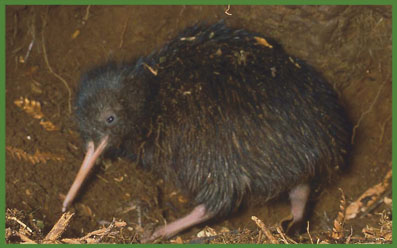
  • Without predator control, 9 out of every 10 kiwi chicks born in the wild die before reaching breeding age (12 months).
  • Of 280 kiwi monitored (radio-tagged) through 1080 operations in the Tongariro Forest Park from 2007 to 2011, none were lost to 1080.
  • Of the 280, 64 died, either through predation by stoats or ferrets, assumed predation, or misadventure. Click for full details
  • Kiwi chick survival more than doubled in Tongariro Forest in 2006 after a dramatic reduction in pest numbers following a 1080 operation.
  • Field trials have been demonstrated that aerial 1080 operations are far more effective in protecting kiwi than the labour-intensive process of trapping and hand-rearing chicks that had previously been the main strategy to save kiwi.

Kea
  • Since 2008, 145 kea have been monitored by DOC through ten 1080 operations, with 20 recorded deaths.
  • Recent losses (Otira 2013) occurred during part of a research programme ( pg.46 of link ) testing various types of bird repellents. While the results were very disappointing, tracking work had shown that 60% of kea nests were attacked by predators, and benefits from 1080 pest control are considered to continue to outweigh the losses.
  • Research to develop an effective repellent to prevent kea deaths is continuing.

Kokako
  • The acutely threatened kokako was pushed to the brink of extinction by possums and rats.
  • Without predator control, most female kokako are killed while sitting on the nest.
  • Over 8 years, aerial 1080 effectively ‘rescued’ kokako, reducing predation to the point where 50% of nests were able to produce young.

Other native bird species
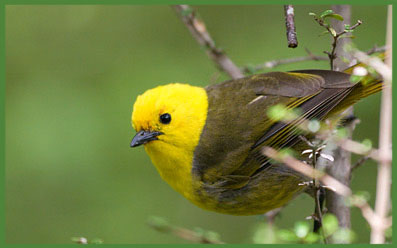
  • Many other native bird species, including kiwi, tomtits, WHIO, kakariki and mohua have been protected and their populations increased following 1080 ( pg.37, footnote 88 ) operations.

Plants
  • Studies ( p. 32 ) have shown many species of native plants and trees show significantly better growth and survival after an aerial 1080 operation.
  • 1080 is highly water soluble and biodegradable, and does not accumulate or leave permanent residues in soil, plants, water or animals.

Insects
  • Invertebrate populations have been monitored during eight 1080 aerial operations. Monitoring of ground-based insect populations within 20cm of 1080 bait show some temporary reduction in insect populations. Numbers return to normal levels within six days after the bait has been removed or has biodegraded.

Farmed animals
  • 1080 can kill cattle and other domestic farm animals if they access baits but farmers have ample notice of planned drops in areas near their farmland.
  • Farmers are responsible for ensuring stock cannot access drop zones or bait stations.
  • Controlling pests in bush areas that border on farmland is particularly important, because of the risk of possum-carried bovine TB.
  • Farmers are generally very supportive of 1080 use and there is no evidence of any ‘cover ups’ of stock deaths arising from 1080 use.

Dogs
  • It is well known that 1080 is highly toxic to dogs . Up to ten times more so than other animals.
  • A small number of dog poisonings and deaths (8) from 1080 have been reported in recent years, but the majority of reported dog poisonings relate to domestic use of anticoagulant rat poison, Slug and ant baits.
  • Dog owners are notified and warned in advance to keep their dogs well away from 1080-treated areas, and muzzled if there is any risk at all of a dog straying into areas where there are baits or poisoned carcasses.
  • Vets are advised of planned drops.
  • Roads and tracks leading to targeted areas are clearly signposted.
  • If a dog is thought to have eaten 1080 bait it should be taken to a vet immediately. A dog may be saved if acetamide is administered as an emetic within four hours of eating the bait.

1080 operations
  • 1080 is the currently registered for use on mainland New Zealand as suitable for aerial targeting of possums.
  • Aerial application of 1080 using helicopters is a carefully planned process, targeting and avoiding specific areas and boundaries using GPS technology. Aerial targeting is an essential part of the strategy:
- for reaching areas that are inaccessible or dangerous by land, and
- protecting TB-free areas throughout the country by creating an effective buffer zone from TB-infected areas.
  • Ground-based operations are used in about two thirds of the areas where it has been identified that possum control is necessary.
  • Very strict notification procedures are followed prior to all 1080 operations, including the approval of the local public Medical Officer of Health.

Accidental by-kill of native and non-target species
  • The organizations that use 1080 have always been very concerned to ensure that it effectively targets the Introduced pests and has minimal impact on native species which they are trying to protect.
  • Some inadvertent by-kill of native bird species has been recorded, but most of these occurred in past decades in operations that used poor quality carrot baits with many small fragments. Even then, monitoring indicates that these losses were more than made up for by increases in populations after pests numbers were knocked down.
  • Today much tighter controls, greatly improved targeting and distribution methods, and development of various repellents, ensure that accidental by-kill is minimal. Nevertheless there are still some accidental deaths of native species.

You might also be interested in:
  • Research including bait repellent and delivery innovation
Pictures
Possum with snail
Rat with bird
Kiwi chick-nga manu
Pictures
Pictures
Mohua
Pictures
Pictures

supporting organizations

This website is operated by the Pest Control Education Trust
About the Trust |    Contact the Trus  t