1080: the facts
  • Home
  • The Facts
    • 1080 factsheet
    • Overview of 1080
    • The science of how 1080 works
    • Facts and figures >
      • The predators
      • The victims
    • Conservation
    • Bovine TB
    • 1080 bait and delivery
    • Alternatives to 1080
    • Regulation of 1080 >
      • Changes to 1080 regulation
  • 1080 at work
    • News
    • Case studies
    • From the field
    • Tiakina Ngā Manu
  • Research + Resources
    • Research
    • Reports
    • Resources >
      • FACTS: in pictures
      • NZ predator control map
  • Projects
    • 1080 and Water
    • 1080 fish
    • 1080 and Dogs
    • The facts of the missing rock
    • 1080 and Soil
  • Gallery
    • Photos
    • Videos
    • Links
  • The Trust
    • About the Trust
    • News from the Trust
    • Our supporters
    • Contact Us

The victims


Kiwi
  • Of 280 kiwi monitored (radio-tagged) through 1080 operations in the Tongariro Forest Park from 2007 to 2011, none were lost to 1080.
  • Of the 280, 64 died, either through predation by stoats or ferrets, assumed predation, or misadventure. Click for full details
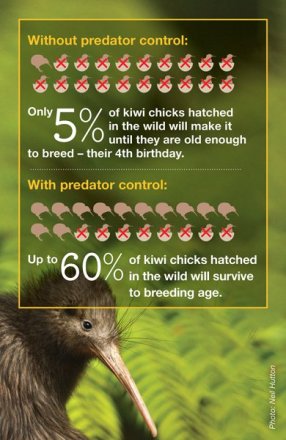
  • Kiwi chick survival more than doubled in Tongariro Forest in 2006 after a dramatic reduction in pest numbers following a 1080 operation.
  • Field trials have been demonstrated that aerial 1080 operations are far more effective in protecting kiwi than the labour-intensive process of trapping and hand-rearing chicks that had previously been the main strategy to save kiwi.

Kea
  • Since 2008, 145 kea have been monitored by DOC through ten 1080 operations, with 20 recorded deaths.
  • Recent losses (Otira 2013) occurred during part of a research programme ( pg.46 of link ) testing various types of bird repellents. While the results were very disappointing, tracking work had shown that 60% of kea nests were attacked by predators, and benefits from 1080 pest control are considered to continue to outweigh the losses.
  • Research to develop an effective repellent to prevent kea deaths is continuing.

Kokako
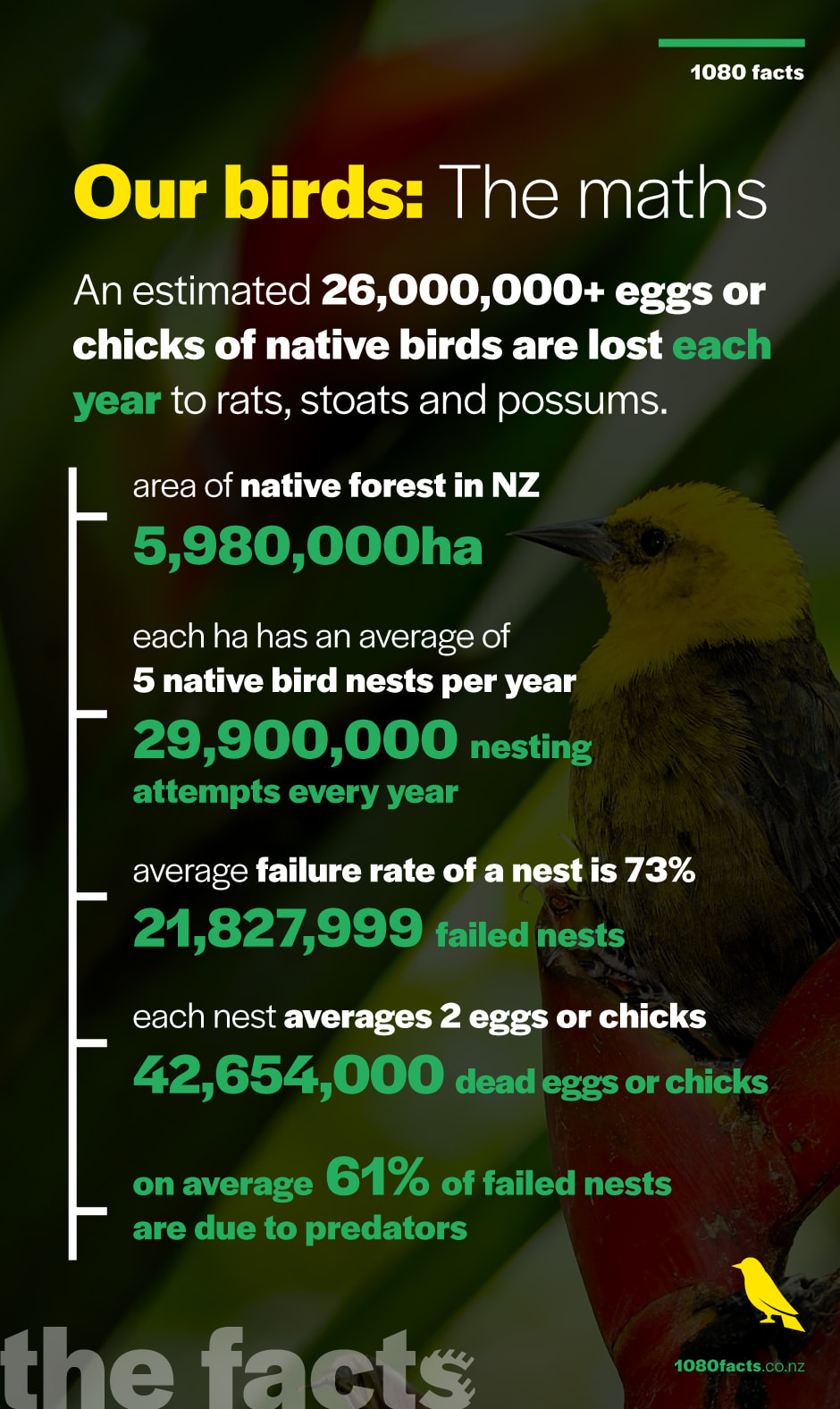
  • The acutely threatened kokako was pushed to the brink of extinction by possums and rats.
  • Without predator control, most female kokako are killed ( pg.39 ) while sitting on the nest.
  • Over 8 years, aerial 1080 effectively ‘rescued’ kokako, reducing predation to the point where 50% of nests ( pg.38 ) were able to produce young.

Other native bird species
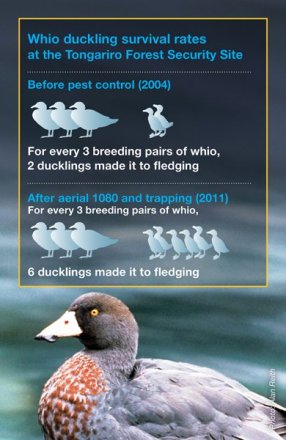
  • Many other native bird species, including kiwi, tomtits, WHIO, kakariki and mohua have been protected and their populations increased following 1080 ( pg.37, footnote 88 ) operations.
  • Studies ( p. 32 ) have shown many species of native plants and trees show significantly better growth and survival after an aerial 1080 operation.


​

Pictures
Pictures
Pictures

supporting organizations

This website is operated by the Pest Control Education Trust
About the Trust |    Contact the Trus  t