 Mohua-credit DOC James Reardon
Department of Conservation
Over the last eight months DOC has treated more than 600,000 hectares of priority conservation areas using aerial 1080 to control rats, possums and stoats as part of its coordinated Battle for our Birds programme.
Poison bait stations and expanded trapping networks were also employed to combat the rising predator numbers fuelled by a once-in-15-year beech seeding event.
Over the last eight months DOC has treated more than 600,000 hectares of priority conservation areas using aerial 1080 to control rats, possums and stoats as part of its coordinated Battle for our Birds programme.
Poison bait stations and expanded trapping networks were also employed to combat the rising predator numbers fuelled by a once-in-15-year beech seeding event.
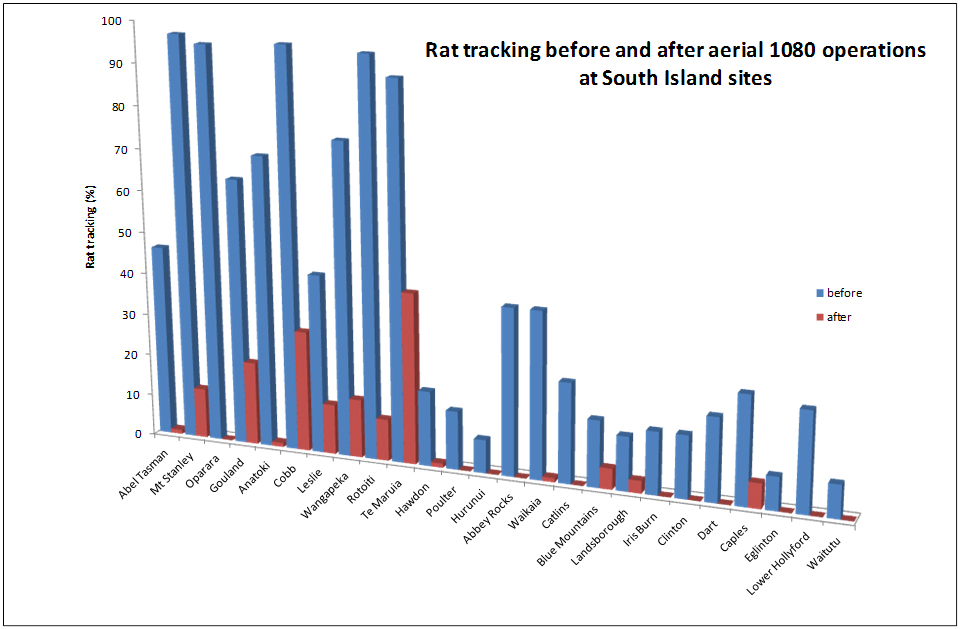
DOC Deputy Director-General Conservation Services Mike Slater said tracking rates indicate rats and stoats were knocked down to undetectable or very low levels at most sites giving much needed protection to vulnerable native birds and bats.
"Rat levels crashed in most areas and tracking indicates we've also knocked back the stoat plague that often follows these beech mast events.”
“It'll take another breeding season to assess the full impacts but we're already starting to see positive breeding results for some of the native birds and bats we're watching closely.
“Early results show the nesting success of rock wren, mōhua, robin and riflemen was significantly higher in areas treated with aerial 1080 than those without.”
For example, rock wren nesting success in the Kahurangi aerial 1080 area was 85% compared to 30% in nearby areas without pest control, said Mike Slater.
"Whio / blue duck and bats also look to have benefited although we don't yet have the final results from these monitoring programs.”
Mike Slater said some native birds had also been lost to 1080 through the pest control operations, including four out of 48 kea tracked at sites in South Westland, Kahurangi National Park, Arthur's Pass national park and at Lake Rotoiti.
“It's unfortunate to lose any Kea but without protection most Kea chicks are killed by stoats so the overall benefits of these operations outweigh individual losses.”
Mike Slater said rat populations reached extreme levels at some sites and there were lower knock down rates than expected in a small number of operations although rat numbers still plummeted.
“We are closely analyzing results so we can pinpoint the factors such as timing and sowing rates that we could improve in future predator plague responses.”
DOC is planning to carry out aerial 1080 pest control over about 250,000 hectares this year – about 50,000 hectares more than normal – to protect vulnerable native species from pests, said Mike Slater.
"We are not expecting another beech mast this year but the Battle for our Birds continues and DOC is committed to extending our regular pest control work to protect our most at-risk native animals and plants.”
Background information
"Rat levels crashed in most areas and tracking indicates we've also knocked back the stoat plague that often follows these beech mast events.”
“It'll take another breeding season to assess the full impacts but we're already starting to see positive breeding results for some of the native birds and bats we're watching closely.
“Early results show the nesting success of rock wren, mōhua, robin and riflemen was significantly higher in areas treated with aerial 1080 than those without.”
For example, rock wren nesting success in the Kahurangi aerial 1080 area was 85% compared to 30% in nearby areas without pest control, said Mike Slater.
"Whio / blue duck and bats also look to have benefited although we don't yet have the final results from these monitoring programs.”
Mike Slater said some native birds had also been lost to 1080 through the pest control operations, including four out of 48 kea tracked at sites in South Westland, Kahurangi National Park, Arthur's Pass national park and at Lake Rotoiti.
“It's unfortunate to lose any Kea but without protection most Kea chicks are killed by stoats so the overall benefits of these operations outweigh individual losses.”
Mike Slater said rat populations reached extreme levels at some sites and there were lower knock down rates than expected in a small number of operations although rat numbers still plummeted.
“We are closely analyzing results so we can pinpoint the factors such as timing and sowing rates that we could improve in future predator plague responses.”
DOC is planning to carry out aerial 1080 pest control over about 250,000 hectares this year – about 50,000 hectares more than normal – to protect vulnerable native species from pests, said Mike Slater.
"We are not expecting another beech mast this year but the Battle for our Birds continues and DOC is committed to extending our regular pest control work to protect our most at-risk native animals and plants.”
Background information
- DOC's 2014/15 Battle for our Birds pest control programme was targeted to combat a seed-fuelled plague of rodents and stoats across large areas of South Island beech forests. Operations were designed to protect at-risk populations of mōhua/yellowhead, kākāriki/parakeet, kiwi, whio/blue duck, kea, kākā, rock wren, giant land snails and native bats.
- DOC monitors rat numbers using tracking tunnels before and after pest control operations to show their success and results are shown in the graph below.
- Stoats are only monitored once a year after they breed in the summer. Results from stoat tracking show stoat plagues were prevented at all 15 sites analyzed to date.
- DOC is continuing to closely monitor key at-risk native bird and bat species (mōhua, whio, long-tailed bats, rock wren and kea) at a number of sites to gauge the on-going effects of pest control.
For more information click here
here
 RSS Feed