|
As scientists are hailing the 2014 Battle for the Birds 1080 poison control operations a success, there are ominous signs of another rat plague next year.
Department of Conservation monitoring has confirmed the widespread occurrence of abundant beech flowering, which is usually followed by a huge seed fall in autumn. Forest and Bird advocate Kevin Hackwell said the government needed to urgently allocate emergency funding for pest control. |
|
Doc scientist Dr Graeme Elliott said they would not know for sure till late summer whether the flowering would lead to large scale seeding.
Hackwell agreed but said it was important that DOC started planning because there was no funding waiting in the wings.
At the beginning of 2014 then-Minister of Conservation Nick Smith announced funding of $21 million for five years for the Battle of the Birds, but that funding came out of DOC's operational budget and existed only because DOC postponed employing staff.
Since then the staff have been appointed and the funding for extra pest control has disappeared.
In 2014, DOC spent $12 million on 27 operations spreading 1080 poison in aerial drops over 680,000 hectares.
Present Conservation Minister Maggie Barry said DOC would be ready to deal with another mast event.
"Over the past few weeks I have been discussing funding options to meet a potential mast with my colleagues. No firm decisions will be made until we know whether the mast will happen. However, I am confident DOC will handle the challenge and protect our vulnerable birds if it does," she said.
Elliott said beech trees flower every 2-6 years and in a "mast" or prolific seeding year such as 2014 produce 50 million seeds per ha, or 250 kg per ha.
"That's a huge pulse of energy going into the forest system and it produces a predator-prey response. Rats and mice breed like hell, providing food for stoats, which leads to predation of birds," Elliott said.
Elliott said the monitoring of birds done before and after the 1080 drops last year showed a significant boost in numbers, despite the fact some birds had died after eating 1080.
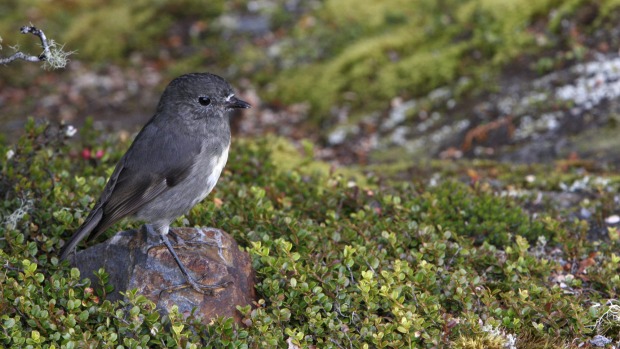
Species monitored included South Island robin, rifleman, rock wren, morepork and kea. The surveys covered areas that were treated with 1080 against those not.
A few rock wren and kea were killed by 1080, but overall nesting success where 1080 was used was higher than where it was not dropped.
None of the other species died because of 1080. Elliott said that in the past robins had eaten fragments of 1080 baits but the baits had been changed and the amount of poison reduced.
"We monitored 25 South Island robins in the Marlborough Sounds, before and during the drops, and they all survived," Elliott said.
"We also looked at robin nesting success - before the drops it was 7 per cent and after it rocked up to 50 per cent. Before, most robins never managed to keep their eggs to hatching but after they got right through to fledgling. It was the same story for riflemen."
At least 95 per cent of rats were killed in most areas, except a few such as Maruia in Buller. Elliott said the rats had been in such dense numbers that there were probably not enough baits.
He estimated that 85 per cent of stoats were killed. Where fewer rats died, more stoats survived because stoats the after eating rats.
John Innes of Landcare Research said ship rats recovered within one or two years of 1080 operations, faster than possum recovery.
"There's a short window of gain from rat control in podocarp broadleaf forests, beech forests are a little different. For fauna vulnerable to rats you want precise operational timing regarding bird nesting and beech masting," Innes said.
While operations were generally carried out in winter and spring, studies had shown benefits of doing them more frequently.
Director of the centre of Wildlife Management and Conservation, Lincoln University, Professor Charles Eason, said no other methods came "close to replacing 1080".
"Alternative methods have their place but it's likely to be like that [using 1080] for the future," Eason said.
- Stuff
http://www.stuff.co.nz/environment/74116221/potential-rat-plague-threatens-native-birds
Hackwell agreed but said it was important that DOC started planning because there was no funding waiting in the wings.
At the beginning of 2014 then-Minister of Conservation Nick Smith announced funding of $21 million for five years for the Battle of the Birds, but that funding came out of DOC's operational budget and existed only because DOC postponed employing staff.
Since then the staff have been appointed and the funding for extra pest control has disappeared.
In 2014, DOC spent $12 million on 27 operations spreading 1080 poison in aerial drops over 680,000 hectares.
Present Conservation Minister Maggie Barry said DOC would be ready to deal with another mast event.
"Over the past few weeks I have been discussing funding options to meet a potential mast with my colleagues. No firm decisions will be made until we know whether the mast will happen. However, I am confident DOC will handle the challenge and protect our vulnerable birds if it does," she said.
Elliott said beech trees flower every 2-6 years and in a "mast" or prolific seeding year such as 2014 produce 50 million seeds per ha, or 250 kg per ha.
"That's a huge pulse of energy going into the forest system and it produces a predator-prey response. Rats and mice breed like hell, providing food for stoats, which leads to predation of birds," Elliott said.
Elliott said the monitoring of birds done before and after the 1080 drops last year showed a significant boost in numbers, despite the fact some birds had died after eating 1080.
Species monitored included South Island robin, rifleman, rock wren, morepork and kea. The surveys covered areas that were treated with 1080 against those not.
A few rock wren and kea were killed by 1080, but overall nesting success where 1080 was used was higher than where it was not dropped.
None of the other species died because of 1080. Elliott said that in the past robins had eaten fragments of 1080 baits but the baits had been changed and the amount of poison reduced.
"We monitored 25 South Island robins in the Marlborough Sounds, before and during the drops, and they all survived," Elliott said.
"We also looked at robin nesting success - before the drops it was 7 per cent and after it rocked up to 50 per cent. Before, most robins never managed to keep their eggs to hatching but after they got right through to fledgling. It was the same story for riflemen."
At least 95 per cent of rats were killed in most areas, except a few such as Maruia in Buller. Elliott said the rats had been in such dense numbers that there were probably not enough baits.
He estimated that 85 per cent of stoats were killed. Where fewer rats died, more stoats survived because stoats the after eating rats.
John Innes of Landcare Research said ship rats recovered within one or two years of 1080 operations, faster than possum recovery.
"There's a short window of gain from rat control in podocarp broadleaf forests, beech forests are a little different. For fauna vulnerable to rats you want precise operational timing regarding bird nesting and beech masting," Innes said.
While operations were generally carried out in winter and spring, studies had shown benefits of doing them more frequently.
Director of the centre of Wildlife Management and Conservation, Lincoln University, Professor Charles Eason, said no other methods came "close to replacing 1080".
"Alternative methods have their place but it's likely to be like that [using 1080] for the future," Eason said.
- Stuff
http://www.stuff.co.nz/environment/74116221/potential-rat-plague-threatens-native-birds
 RSS Feed