


The mathematics behind big wins


Bets, winnings and refunds
Gambling is based on an idea of balance between income and expenses. What this means is that the money paid out in winnings should be covered by the money that has already been wagered. The principle applies to just about all games of chance, i.e. casino as well as betting, poker, bingo – yes just about all games with money involved. At the same time, gambling is not a zero-sum game. Some win while others lose. Fortunately, these two categories are not static, and today's losers can become tomorrow's winners.
Everything is based on basic mathematics. Five bets of$ 10 each will award a$ 50 pot that can be paid out to one or more winners. The distribution can be random, such as in casino games, or based on a certain degree of skill, such as in poker and even black jack .
However, this is not the whole truth. The person who makes the game wants a piece of the cake. It is not the entire$ 50 pot according to our example that will be paid out. Rather, it is about a lower amount. If we look at casino games in general, the payback in winnings is around 96% (that is,$48). If we look at number games such as lotto games, the pot can almost be halved.
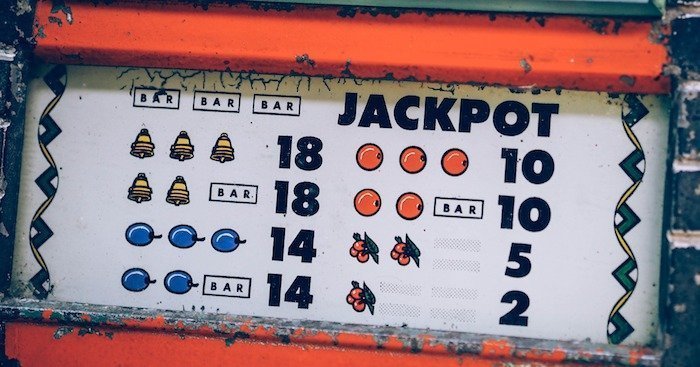
The smaller the profit, the greater the payback
When playing for money, you can have a chance of winning anywhere from a few millionths up to almost 50%. An example of a game that gives you close to 50% chance of winning is betting on red or black on the roulette table. Blackjack and baccarat are other games where the chances of winning are really high.
If you play red or black (or any of the other 1 to 1 games) on roulette, the chance of winning is 48.6%. The chances of hitting a bet on the banker or the player in baccarat are about the same.
Interestingly, the smaller the profit, the greater the payback itself will be overall. In roulette, you get back 97.30% over time. In blackjack, the payback can exceed 99% (depending on the variant) and in baccarat, betting on the banker gives a payback of 98.94%.
In contrast, of course, the larger the winnings, the lower the payback overall. It is something that, first of all, automatically follows from the mathematics behind the games. Secondly, it is also about the fact that the game organizer has the opportunity to take a larger piece of the cake.
Jackpot games have lower payback
In Jackpot games, different jackpot pools are fed with parts of the players ' bets. For a bet of$ 10, for example, anything between 10 cents and 50 cents can be channeled directly into the pot. Popular Mega Fortune for example, 5.39% of the bet goes to the biggest, Mega, Jackpot.
This small detail causes the return to players to be reduced. Thus, the bets go not only to the pot that pays out regular line wins, but also to a separate pot that only the person who finally wins the jackpot gets to take part of. For this reason, it is wise to play jackpot games only if it is really the jackpot you are looking for.
Chasing jackpots is something that, for natural reasons, is popular. This automatically means that game organizers can see the chance to skimp a little more with the refund. If there are millions to be won, players are less likely to take a closer look at actual winning chances and actual payback. It is quite clear that jackpot games normally have a payback that is lower than the average.
The principle of "bigger wins-lower payback" usually also applies to games that, although not jackpot games, can still pay out very large maximum wins. The higher the maximum win in coins, the lower the payback is probably on average.
Latest news

The case in brief TV4 is convicted by the Supreme Court of that...
 by Roland Burns

Bookmakers can reduce the problem gambling industry is today...
 by Karen Lynch

It's always nice to see new game developers on the market....
by Roland Burns

Some similarities with the popular roulette game Lightning...
by Roland Burns

ATG's winning Ambassador Hans G Lindskog took as usual...
by Roland Burns

ATG is perhaps best known for betting on horses, but has...
by Karen Lynch


Recommended casinos right now


 Gaming licenses: New Zealand , Malta (mga), United Kingdom (UKGC)
 Number of games: 1300
 Minimum deposit: 5$
 Payment methods:



smooth sockets
 Gaming licenses: New Zealand , United Kingdom (UKGC), Malta (mga)
Number of games: 3000
Minimum deposit: 10$
Payment methods:
Gaming licenses: New Zealand , United Kingdom (UKGC), Malta (mga)
Number of games: 3000
Minimum deposit: 10$
Payment methods:




Direct profit withdrawal

 Gaming Licenses: New Zealand
Number of games: 700
Minimum deposit: 10$
Payment methods:
Gaming Licenses: New Zealand
Number of games: 700
Minimum deposit: 10$
Payment methods:
Immediate withdrawal

 Casino Swish
 Casino Games
 Low deposit
 New Zealand license